

 by
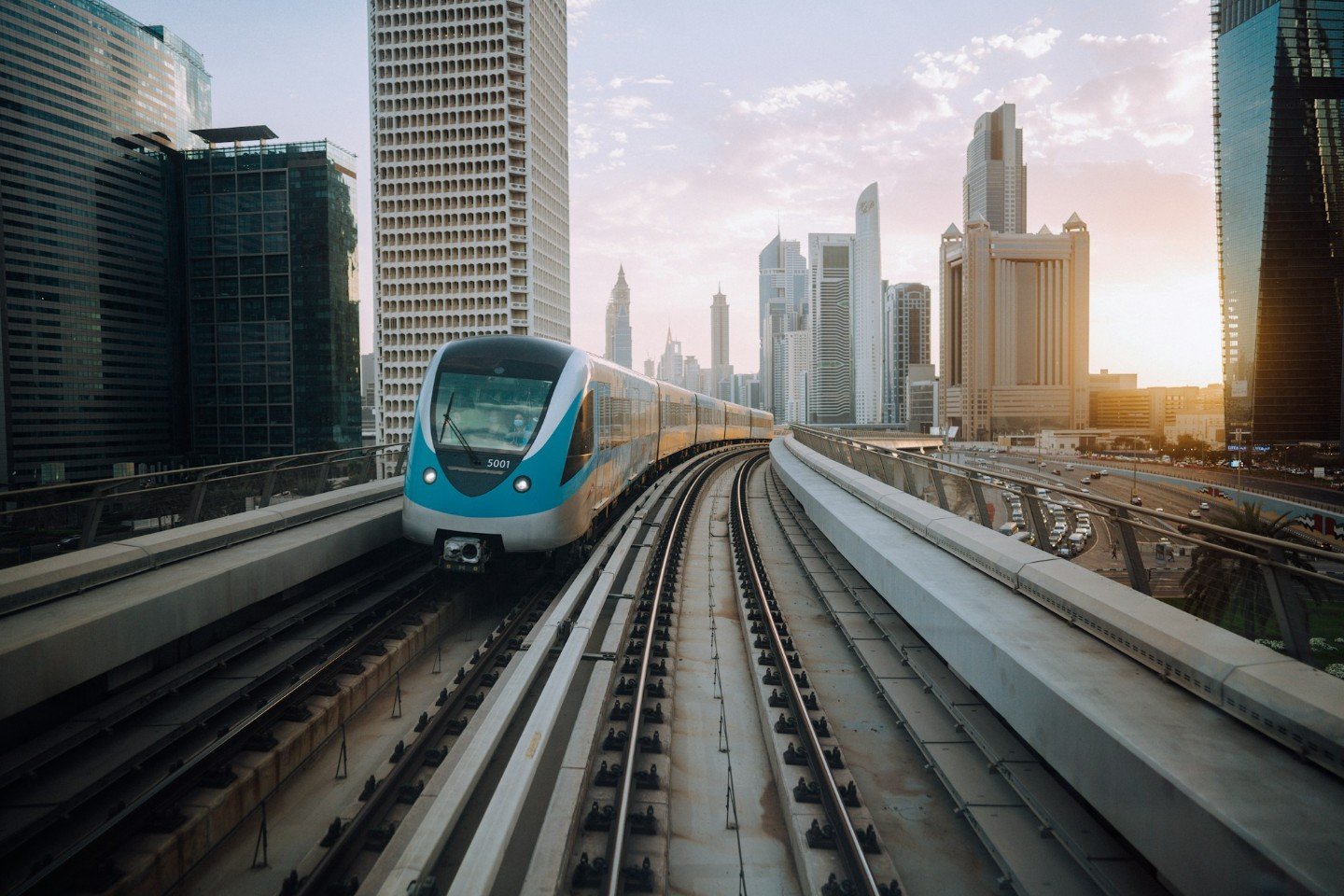
Dubai’s Metro network is set to almost double in length, from 90 km today to 162 km by 2032. For buyers, the new Blue and Gold Lines are redrawing the map of where convenience — and value — will grow next.
When the Red Line opened in 2009, it quietly changed which neighbourhoods people wanted to live in. Homes within reach of a station became easier to live in, easier to rent out and easier to resell. Seventeen years later, Dubai is preparing the biggest expansion of its Metro since then.
Two new lines are now under way. The Blue Line has been under construction since June 2025 and was about a quarter complete in September 2026. The Gold Line was approved in April 2026 as the emirate’s first fully underground route. In September, the head of the Roads and Transport Authority said land values around future stations could rise by 15 to 30%. For anyone buying in Dubai over the next few years, where these lines run matters.
The Blue Line: Connecting Dubai’s East by 2029
The Blue Line will run 30 km, part underground and part elevated, with 14 stations on two branches. It is scheduled to open on 9 September 2029.
- Branch 1 (via the Green Line): from the Creek interchange at Al Jaddaf to Dubai Festival City, Dubai Creek Harbour, Ras Al Khor, International City, Dubai Silicon Oasis and Academic City.
- Branch 2 (via the Red Line): from Centrepoint in Al Rashidiya through Mirdif and Al Warqa to International City.
- A landmark station: the Emaar Properties Station at Dubai Creek Harbour, designed by SOM, will be the world’s tallest metro station at 74 metres.
- Who it serves: nine districts expected to be home to more than one million residents by 2040.
Sources: Roads and Transport Authority statements reported by Khaleej Times (September 2026), Gulf News, Railway Gazette and betterhomes. Station locations on the Gold Line are not yet confirmed.
The Gold Line: An Underground Spine Through New Dubai by 2032
From the old city to the new districts
The Gold Line will run 42 km underground with 18 stations, from Al Ghubaiba in historic Bur Dubai to Jumeirah Golf Estates. On the way it serves Mina Rashid, City Walk, Business Bay, Mohammed Bin Rashid City, Meydan, Al Barsha South and Jumeirah Village Circle. It is due to open on 9 September 2032.
Connected to the national rail network
Two of its stations, Meydan and Jumeirah Golf Estates, are planned as interchanges with future Etihad Rail passenger stations. That links some of Dubai’s fastest-growing communities to Abu Dhabi and the other emirates without a car.
Built around 1.5 million residents
The AED 34 billion line is designed to serve around 1.5 million people and 55 major real estate developments. Many of these communities, such as JVC and Al Barsha South, have grown quickly without a Metro connection until now.
“Buy where the station is going, not only where it already is — but buy a home you would want even without it.”
Which Areas Stand to Gain Most
Not every community on the map will benefit equally. These stand out for buyers today:
- Dubai Creek Harbour — Blue Line, with the landmark Emaar Properties Station. A waterfront master community with both ready homes and new launches, and a short ride to Downtown. See our canal-view townhouse at The Grand and our Palm Jumeirah vs Creek Harbour comparison.
- Mirdif and Al Warqa — Blue Line. Established villa and townhouse areas popular with families, gaining a direct rail link to the Red Line.
- Dubai Silicon Oasis and Academic City — Blue Line. More accessible price points and strong demand from students and young professionals.
- Business Bay, MBR City and Meydan — Gold Line. Central districts gaining a second, underground connection, with Meydan linked to Etihad Rail.
- JVC and Al Barsha South — Gold Line. Dense, popular communities that have so far relied on roads, likely to see the biggest change in day-to-day access.
The market is already reacting. Between November 2023 and mid-2025, rents in the nine Blue Line communities rose 23% on average, according to betterhomes, with Academic City up 43% and Dubai Creek Harbour up 30%. For investors, that is an early sign of the demand a station brings.
Ready Now or Off-Plan Near a Future Station?
Both routes can work. The right one depends on whether you want to use the property now or position for the opening date:
How to Choose: A Buyer’s Checklist
- Check the exact station: a community on the route is not the same as a home near a station. Gold Line station locations are still being finalised.
- Think in walking minutes: the value of a station falls quickly with distance. Ask how you would actually get there.
- Match the timeline: compare the handover date with the line’s opening — 2029 for the Blue Line, 2032 for the Gold Line.
- Look at supply: new stations attract new towers. Check how many units are coming to the same area before you buy.
- Quality still comes first: a Metro line lifts a district, but the developer, the layout and the view decide how well your home holds its value.
The through-line is simple: the Blue and Gold Lines will make some of Dubai’s most liveable communities far easier to reach, and the market is already starting to price that in. Choosing the right address now — close to a station, in a well-built home — is how buyers can benefit most. For the bigger picture, see how Dubai’s 2040 Plan is reshaping property values.
Frequently Asked Questions
The Blue Line is scheduled to open on 9 September 2029. It will run 30 km with 14 stations, linking the Red and Green Lines to Mirdif, Al Warqa, International City, Dubai Silicon Oasis, Academic City, Dubai Creek Harbour and Dubai Festival City.
The Gold Line will run 42 km underground with 18 stations from Al Ghubaiba to Jumeirah Golf Estates, serving areas including City Walk, Business Bay, MBR City, Meydan, Al Barsha South and JVC. It is due to open on 9 September 2032.
The Roads and Transport Authority has said land values around future stations could rise by 15 to 30%, though the effect varies by location and property type. Rents in the Blue Line communities have already risen faster than in many other areas.
A ready home lets you live in it or earn from it immediately, at a price that already partly reflects the line. Off-plan near a future station can offer more upside and a payment plan, with a handover that can match the opening date, but carries more waiting.
Luxe Harmony helps buyers and investors find the right community and the right home along Dubai’s new Metro lines — ready properties and off-plan projects alike.

Join The Discussion